5 Unexpected Uses For Passive Radar
Examples of passive radar applications beyond aircraft tracking, including meteor detection.
Passive radar detects objects using reflections from existing radio broadcasts. Read about how it works, what it can detect, and how to build a receiver.
RETINA connects passive radar receivers operated at different locations. Each receiver compares a broadcast signal with its reflections to detect objects. The receivers send their observations to a shared map, where you can view aircraft tracks and network coverage.
View receiver locations, aircraft tracks, and radar detections. The map includes ADS-B aircraft data for comparison, along with controls for coverage, detection arcs, and track history.
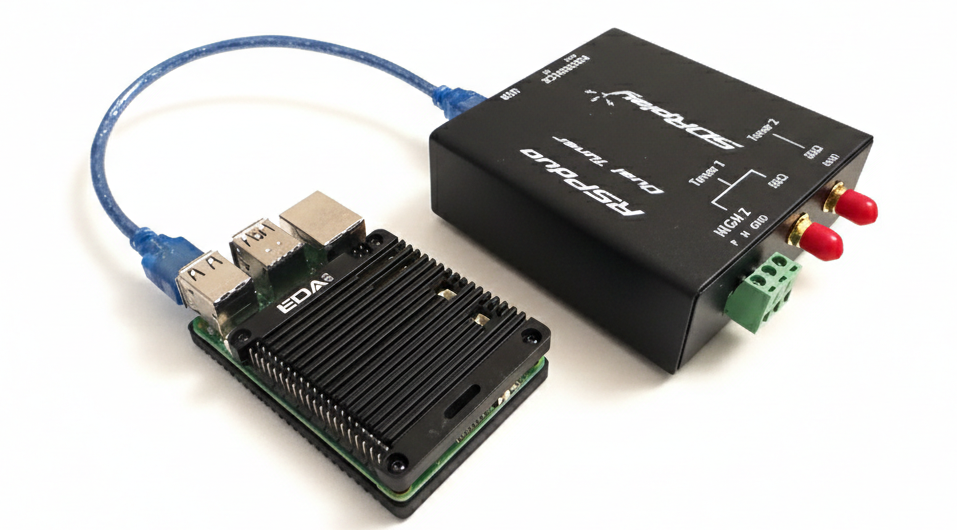
Open the RETINA map ↗Preview imagery: © OpenStreetMap contributors · © CARTOEach kit includes a Raspberry Pi, an RSPduo radio receiver, and a microSD card with the software installed. You will need to assemble the kit, connect antennas, and complete the radar setup before using it as a node on the network.
View kits and requirements →Assembly and radar setup required. Antennas and coaxial cables are not included.An introduction to broadcast signals, reflections, and the measurements used to detect objects with passive radar.
Read the introduction →Examples of passive radar applications beyond aircraft tracking, including meteor detection.
A proposal for an organization that supports scientists facing restrictions on their research.
A memorandum on the jurisdiction and classification of passive radar systems, components, and technology.
The hardware and setup needed to start experimenting with passive radar.
What passive radar can detect, and why stealth aircraft are a more complicated case.
References on software-defined radio, signal processing, and radar projects.